Odessa catacombs
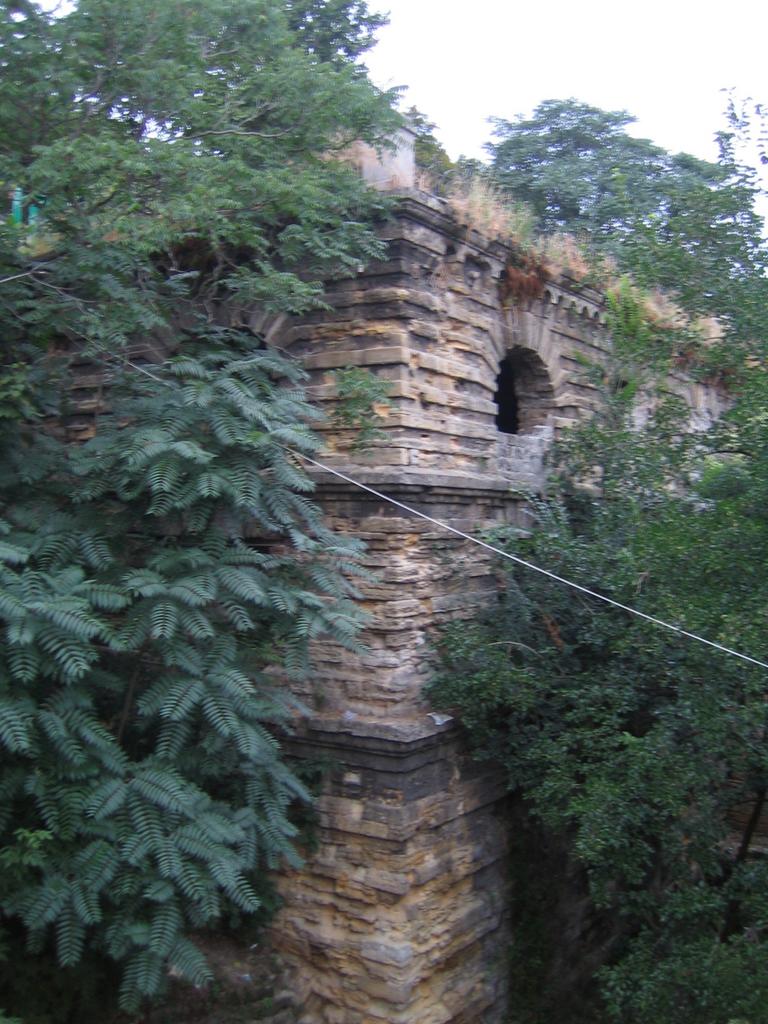
Well, today is THE day, I’m going down to the Odessa catacombs, the largest in the world (2 500 km). Limestone was exploited for building purposes. These quarries are relatively new (200 years old). The stone is actually crumbly chalk, and buildings need a concrete cover. Here is the only bare stone wall I saw in Odessa. It can’t be very old (a couple of centuries), but already deeply eroded:

Waiting for the night, I investigate how to move on to Crimea. Unfortunately, there are no flights between Odessa and Simferopol this year. The next solution is a night train, but they are full on Sunday and Monday nights. I’ll have to find an alternative when I’m sure about the date.
I meet Escape in the early evening. We walk to the bus station for a microbus to Nerubaiskoye. It’s 21:00 and still 32 ° C. At the station, we unexpectedly meet cataphiles. The more, the merrier!
First a long microbus ride, then a walk along a major road, then across a waste ground, then along a small road, then on a path, then... Then we are in a typical quarries entrance bowl :-)
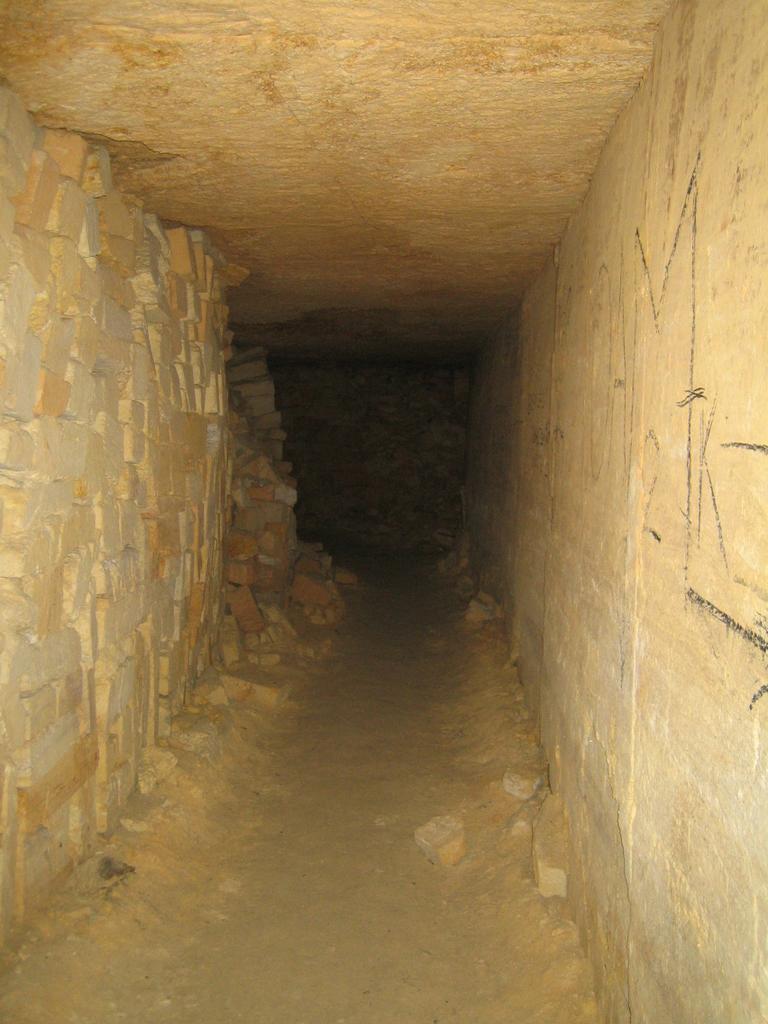
After crawling through the entrance hole, we walk across a series of crashes and subsidences. The stone is probably suffering from great temperature changes. The galeries look better as we go deeper. This is a typical (good) galery:
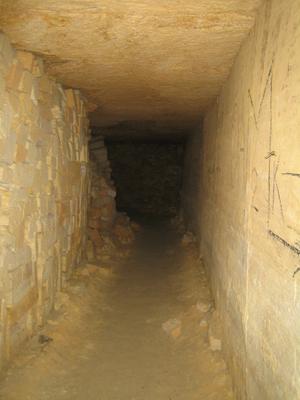
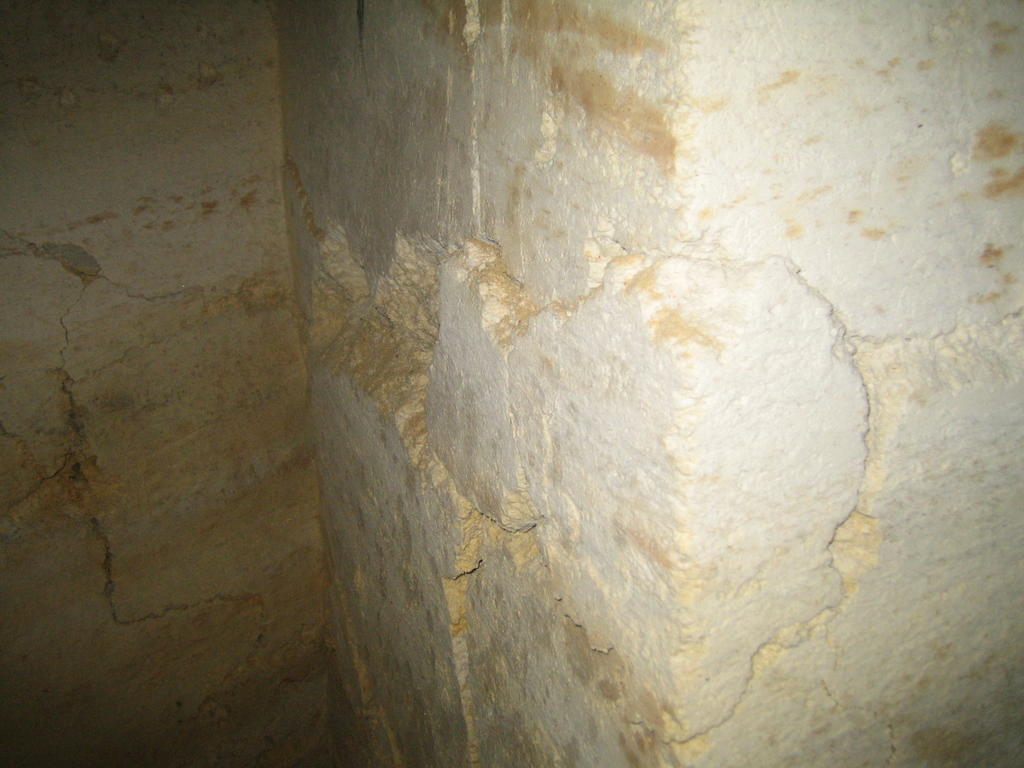
One of the sides is strengthened with a dry stone wall made of “waste” sawn blocks. What they consider as waste in Odessa would be good for sale everywhere else. The chalk is so soft that it was easy to saw huge (approx. 2 m * 60 cm * 60 cm) blocks off. The chalk is also prone to splitting under pressure and crumbling:
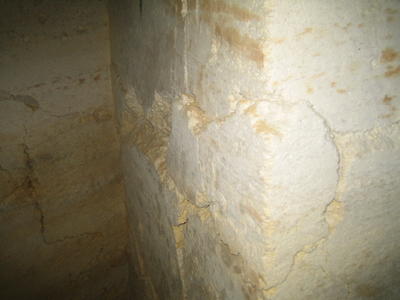
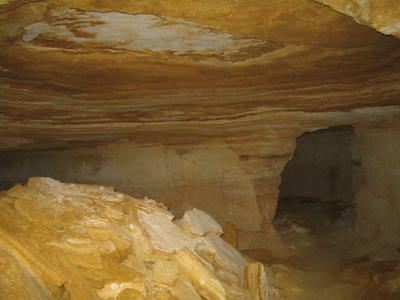
There are few large rooms, and most of them result from crashes. Exploitation was run along narrow corridors (1.50 to 3 m wide, partly filled with waste blocks), because the stone is too weak for more intensive exploitation. The average heigh is 1.80 m, but it can reach 3 m where the stone is harder (around International Women’s Day room, for example).
This network is 800 km long and easy to get lost in. There exist maps, but I don’t have any.
There is little traffic. The place is rather clean, excepted the – sad but usual – garbage stack in rest rooms. There are very few paint graffitis.
Graffiti in cyrillic alphabet has something exotic to me:

Odessite cataphiles do what all cataphiles do: have a walk, talk, drink, cook, smoke, play guitar, sleep... The main difference the Paris cataphiles is that it’s a short walk from the entrance to the “base” and there is little chance to meet someone, so they can afford carrying lots of stuff and leaving them at the “base” while they go for a tour.
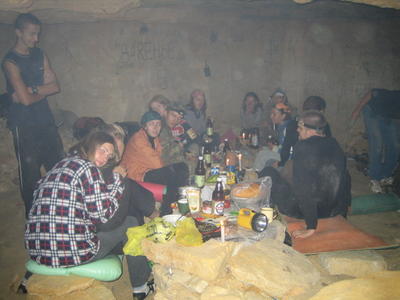
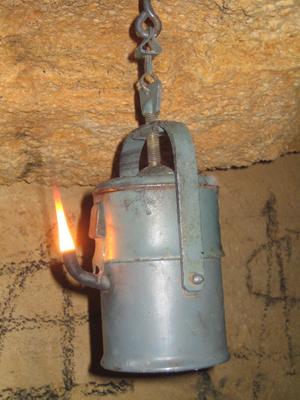
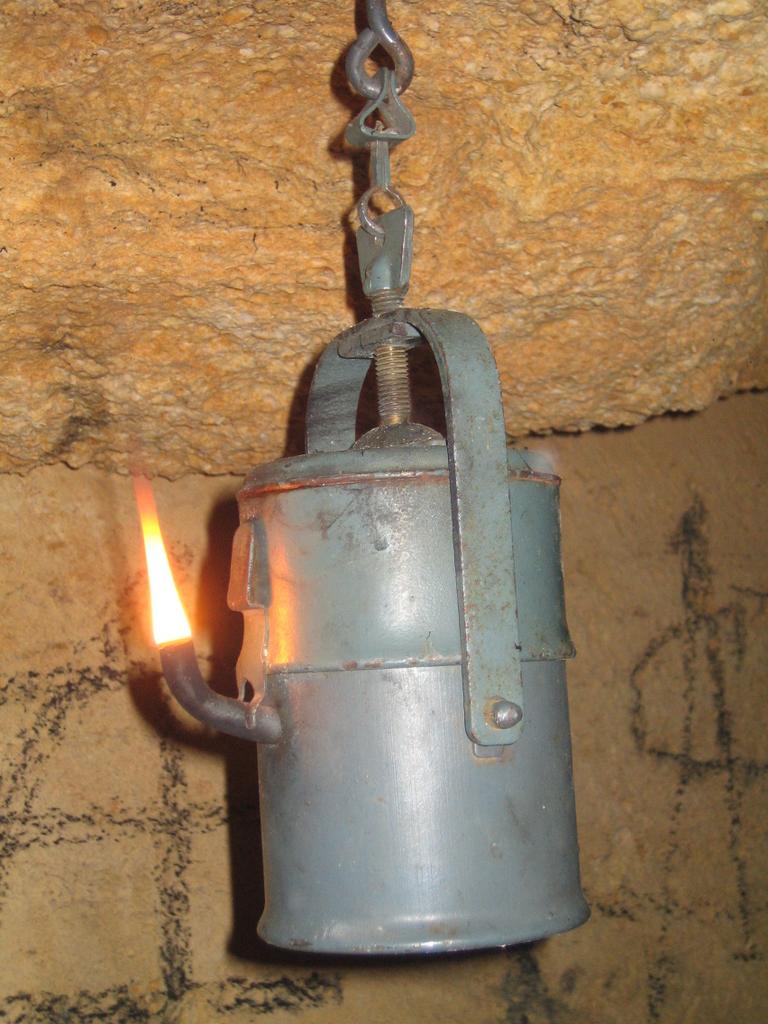
One of them had a nice carbide lamp :
Waiting for the night, I investigate how to move on to Crimea. Unfortunately, there are no flights between Odessa and Simferopol this year. The next solution is a night train, but they are full on Sunday and Monday nights. I’ll have to find an alternative when I’m sure about the date.
I meet Escape in the early evening. We walk to the bus station for a microbus to Nerubaiskoye. It’s 21:00 and still 32 ° C. At the station, we unexpectedly meet cataphiles. The more, the merrier!
First a long microbus ride, then a walk along a major road, then across a waste ground, then along a small road, then on a path, then... Then we are in a typical quarries entrance bowl :-)
After crawling through the entrance hole, we walk across a series of crashes and subsidences. The stone is probably suffering from great temperature changes. The galeries look better as we go deeper. This is a typical (good) galery:
One of the sides is strengthened with a dry stone wall made of “waste” sawn blocks. What they consider as waste in Odessa would be good for sale everywhere else. The chalk is so soft that it was easy to saw huge (approx. 2 m * 60 cm * 60 cm) blocks off. The chalk is also prone to splitting under pressure and crumbling:
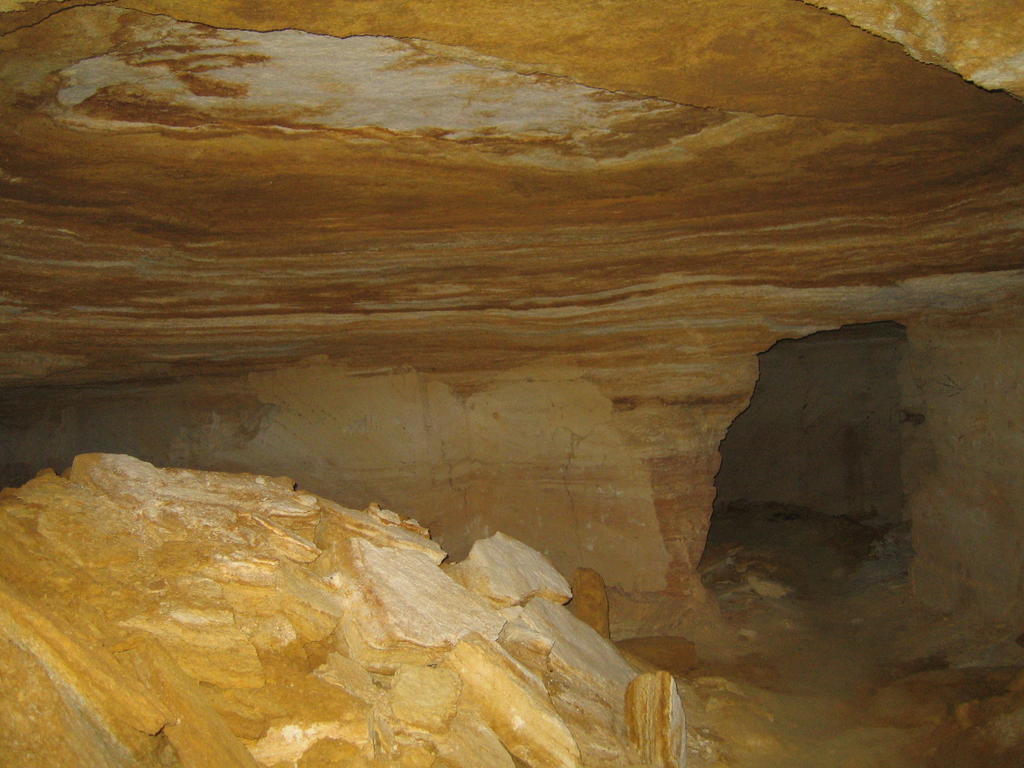
There are few large rooms, and most of them result from crashes. Exploitation was run along narrow corridors (1.50 to 3 m wide, partly filled with waste blocks), because the stone is too weak for more intensive exploitation. The average heigh is 1.80 m, but it can reach 3 m where the stone is harder (around International Women’s Day room, for example).
This network is 800 km long and easy to get lost in. There exist maps, but I don’t have any.
There is little traffic. The place is rather clean, excepted the – sad but usual – garbage stack in rest rooms. There are very few paint graffitis.
Graffiti in cyrillic alphabet has something exotic to me:

Odessite cataphiles do what all cataphiles do: have a walk, talk, drink, cook, smoke, play guitar, sleep... The main difference the Paris cataphiles is that it’s a short walk from the entrance to the “base” and there is little chance to meet someone, so they can afford carrying lots of stuff and leaving them at the “base” while they go for a tour.
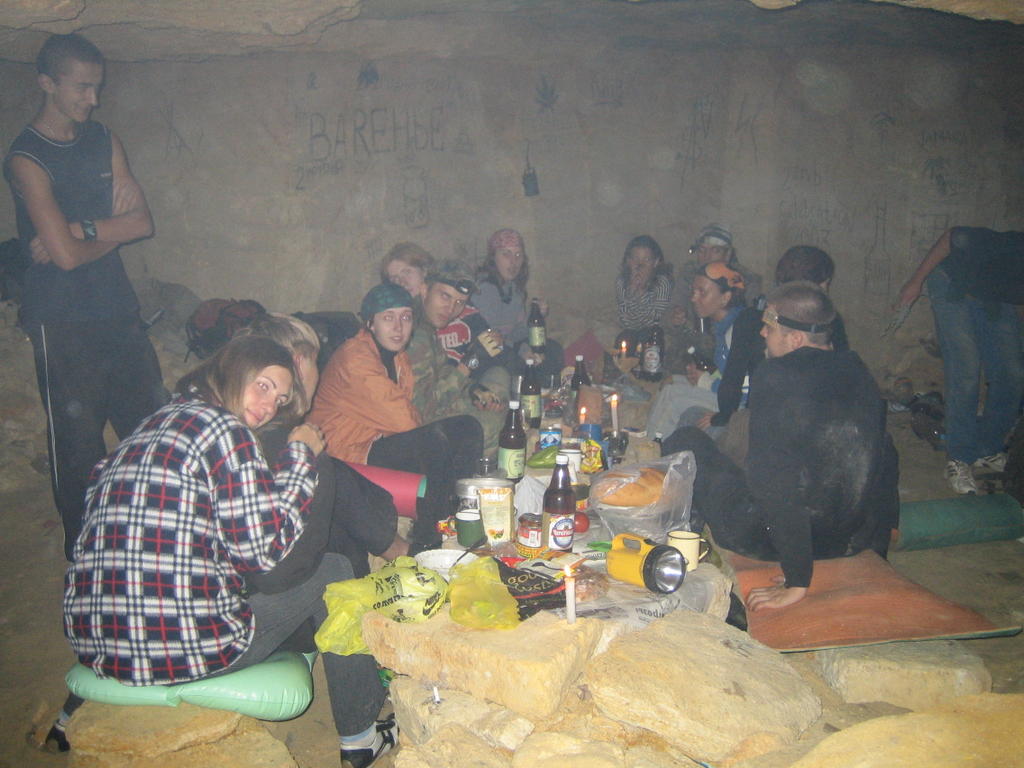
One of them had a nice carbide lamp :
posted by Juliette at 00:00

0 Comments:
Post a Comment
<< Home