Kerch. Adzhimushkai quarries.
Thanks to the Belarussian-German couple, I soon get a room at Hotel Meridian, a typical dull soviet hotel. The check-in form is in Russian only. I look so helpless that the receptionnist smiles and fills it for me, with the help of the Belarussian lady. How would you write “lieu de naissance” in Russian? And if you don’t know, how would you mime it? :-)
In downtown Kerch, I climb the stairs up the Mitridat hill, famous for Greek ruins. It’s steep, there are few ruins and they have been so renovated that they look fake. Next, please.
The Adzhimushkai underground quarries hosted partisans during the Second World War. Their resistance was an important step in the war against Nazis, and Kerch earned the title of “Hero City”, like 15 soviet cities, including Odessa and Sevastopol. I will have to investigate how many of them have underground quarries :-)
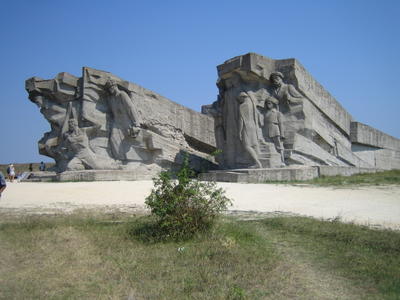
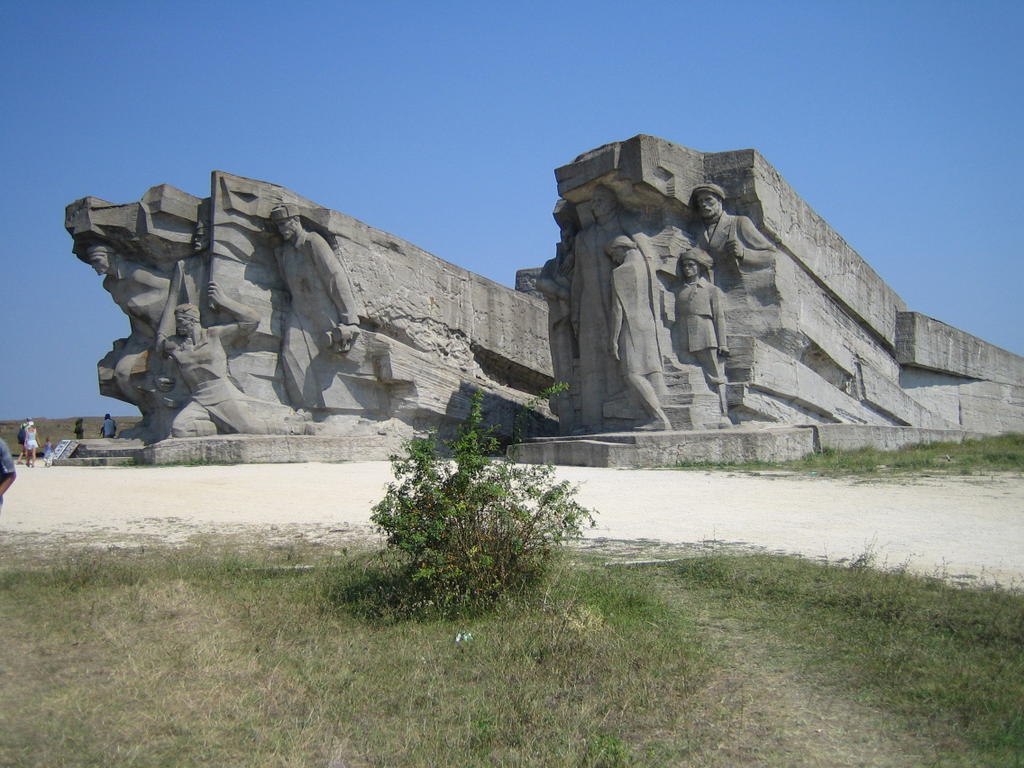
Now there is a Partisans’ museum in these quarries. The entrance is monumental. Great example of soviet non-sense, it is made of concrete, while there was plenty of limestone around.
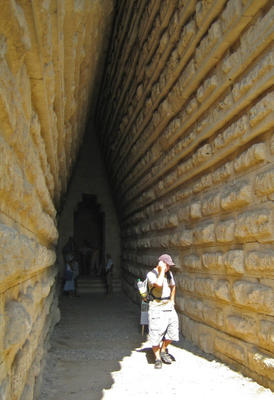
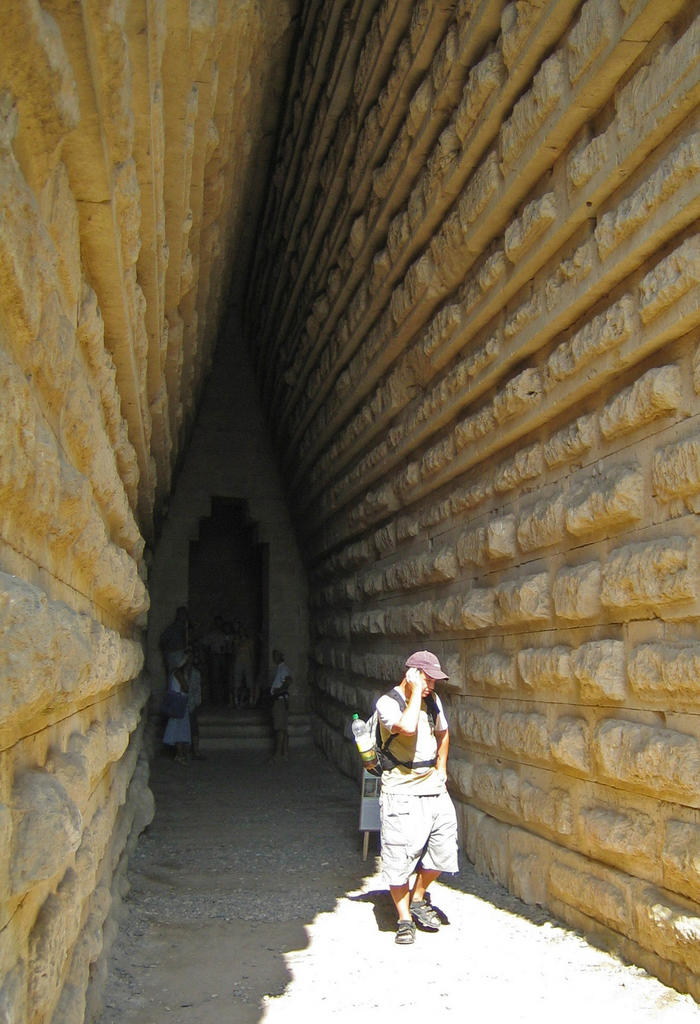
I have to wait for one hour before my tour, so I walk further down the road to another underground monument: Tsarsky Kurgan is a 4th-century mausoleum. A long, high corridor leads to a funeral room. The architecture is strange but elegant, made with corbelling stone blocks. Above is a man-made hill.
It takes 5 minutes to see. I skip the comment in Russian.
I’m back to the Partisans’s museum for the guided tour (in Russian, of course). It is very similar to Odessa’s. We see defence systems, including a smart “noise trap”: noisy items like cans, bottles, etc, are scattered on the floor; if Nazis would try to walk into the quarry while partisans are asleep, they would step on the trap and make such a noise that partisans would wake up. There is also a poor piece of cloth that was supposed to protect from gas attacks.
We walk across the usual reconstitution of kitchen, water well, dorms, hospital, childrens’ place, etc. The guide emphasizes on heroism and patriotism. There are several memorials, build after war with porphyre, which looks stupid in a limestone quarry.
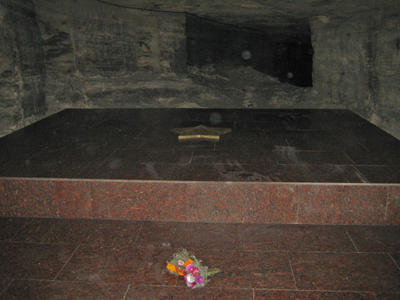
(poor picture, sorry)
The quarry is as dark as a coal mine, because of smoke. Height varies from 1.60 to 3 m. It was exploited with saws. Some places are partly filled with waste material.
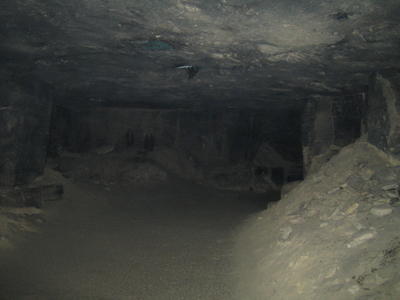
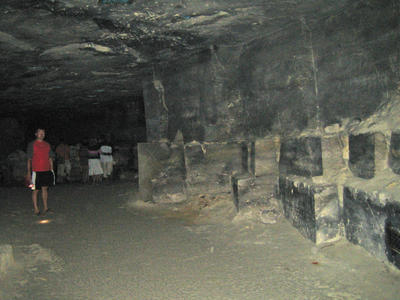
Nazis bombed the area. The ceiling crashed in many places:

After the visit, I walk around looking for entrances in the bombed areas. I am lucky: out of a hole come “diggers” with their tools. They have finished digging for today. The first ones don’t speak English, but they are so many that in the end, two of them can speak a little English. At the beginning, they are very reluctant to talk about their digging, but I manage to persuade them to show me where and how they work.
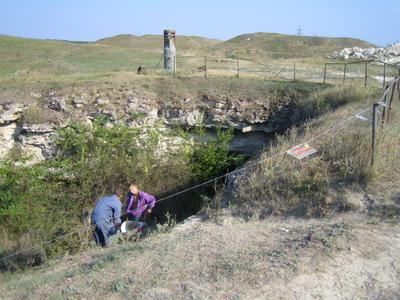
So, what was in their pit? They were digging in a bombed area. This is the kind of place were they are likely to find things, because objects – and people – were trapped when the quarry collapsed. They have been digging here for six summer camps, and they again have found pieces of weapons, bits of dishes... and human bones.
Around their workplace, the quarry stretches out, but they don’t know it well. They are not interested in quarries. The stone is darkened by smoke, just like in the museum.
We agree on a meeting in the evening for a drink downtown, and tomorrow for a visit of another quarry system.
In the evening, I meet Ivan-the-Digger, Ivan-the-Cataphile and his grilfriend Mariana. They all speak English. We chat and drink beer on the seafront. They try to teach me Russian slang words. We can see lights across the strait – Russian lights.
In downtown Kerch, I climb the stairs up the Mitridat hill, famous for Greek ruins. It’s steep, there are few ruins and they have been so renovated that they look fake. Next, please.
The Adzhimushkai underground quarries hosted partisans during the Second World War. Their resistance was an important step in the war against Nazis, and Kerch earned the title of “Hero City”, like 15 soviet cities, including Odessa and Sevastopol. I will have to investigate how many of them have underground quarries :-)
Now there is a Partisans’ museum in these quarries. The entrance is monumental. Great example of soviet non-sense, it is made of concrete, while there was plenty of limestone around.
I have to wait for one hour before my tour, so I walk further down the road to another underground monument: Tsarsky Kurgan is a 4th-century mausoleum. A long, high corridor leads to a funeral room. The architecture is strange but elegant, made with corbelling stone blocks. Above is a man-made hill.
It takes 5 minutes to see. I skip the comment in Russian.
I’m back to the Partisans’s museum for the guided tour (in Russian, of course). It is very similar to Odessa’s. We see defence systems, including a smart “noise trap”: noisy items like cans, bottles, etc, are scattered on the floor; if Nazis would try to walk into the quarry while partisans are asleep, they would step on the trap and make such a noise that partisans would wake up. There is also a poor piece of cloth that was supposed to protect from gas attacks.
We walk across the usual reconstitution of kitchen, water well, dorms, hospital, childrens’ place, etc. The guide emphasizes on heroism and patriotism. There are several memorials, build after war with porphyre, which looks stupid in a limestone quarry.
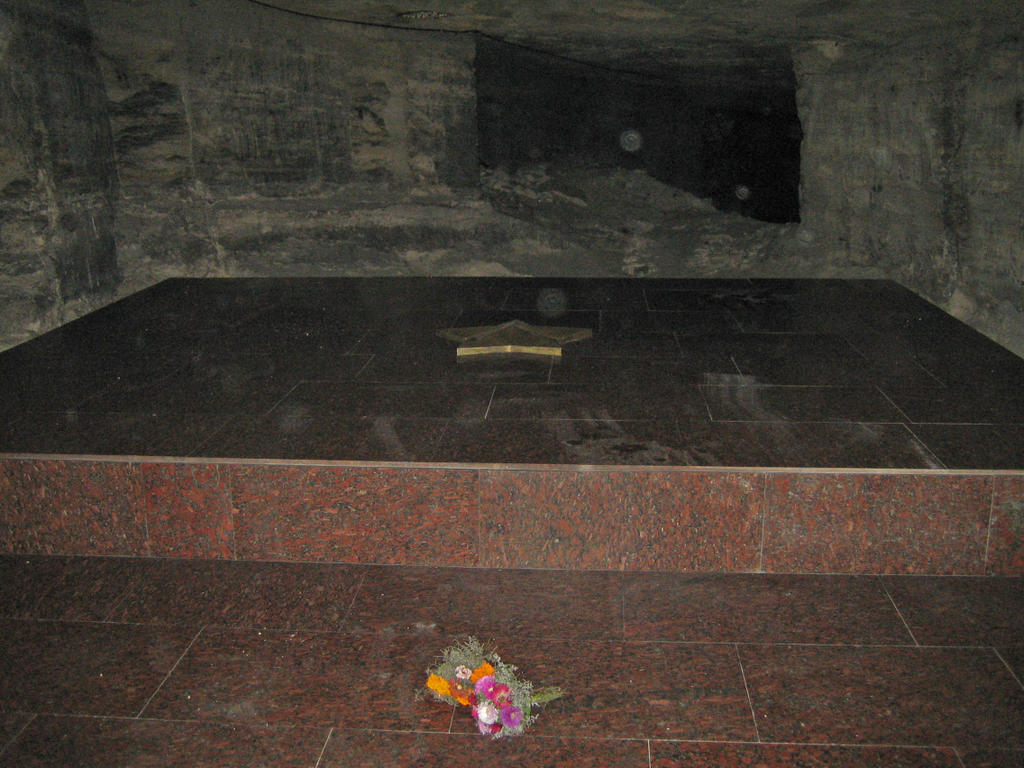
(poor picture, sorry)
The quarry is as dark as a coal mine, because of smoke. Height varies from 1.60 to 3 m. It was exploited with saws. Some places are partly filled with waste material.
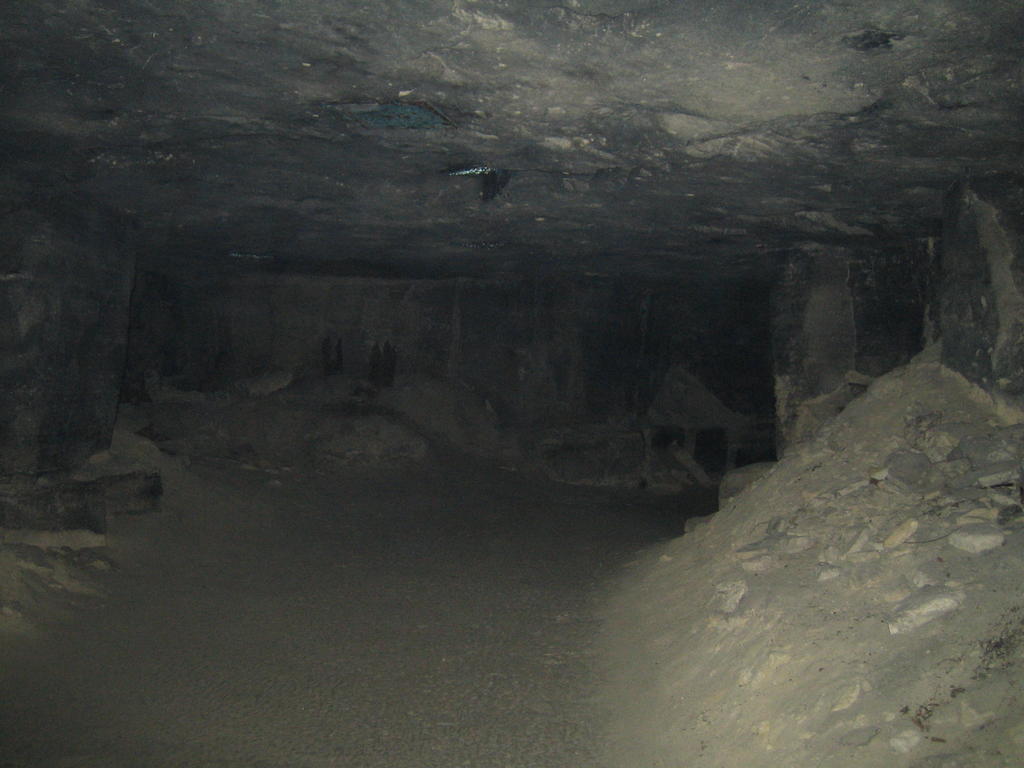
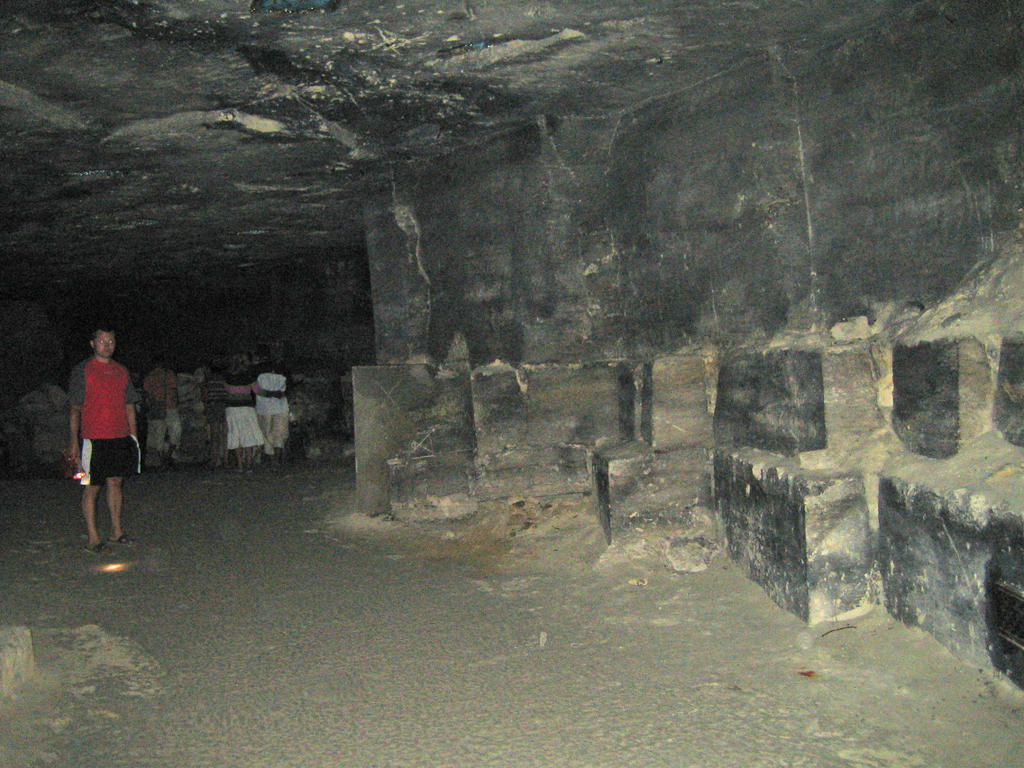
Nazis bombed the area. The ceiling crashed in many places:
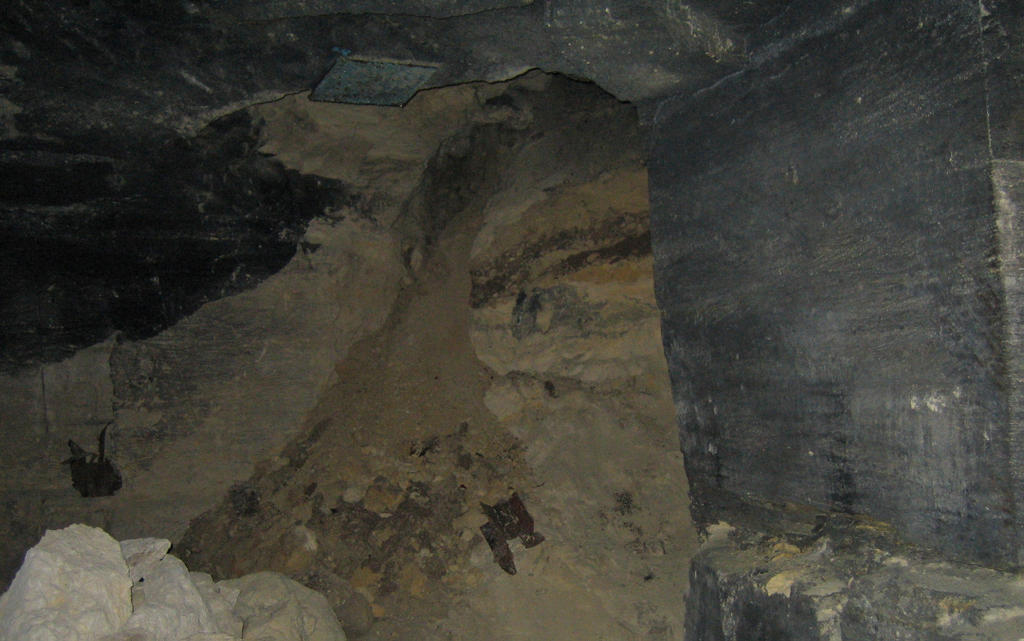
After the visit, I walk around looking for entrances in the bombed areas. I am lucky: out of a hole come “diggers” with their tools. They have finished digging for today. The first ones don’t speak English, but they are so many that in the end, two of them can speak a little English. At the beginning, they are very reluctant to talk about their digging, but I manage to persuade them to show me where and how they work.

For Western readers: What are diggers ?
They are people whose hobby is to dig war fields for remains like weapons, amunitions, uniforms, medals, cutlery, etc. They usually search for remnants of the “Great Patriotic War” (WW2), and sometimes the First World War and the Crimea War (1854-1856).
There are “good” diggers who work under the supervision of archaeologists, and give their findings to museums. And there are “bad” diggers who dig for money and sell their findings to collectors.
The extensive website www.theserpentswall.com gives a good idea about their methods and motivations, but I must say that the authencity of the website is doubvious. It is likely to be a fake.
Diggers are often passionate about History, and a talk with them may lead you to reconsider what you have been taught in school, and wonder on which side of the Iron Wall there was most propaganda. Such a simple question like “Who won the Second World War?” may have an answer that you wouldn’t expect.
A more comprehensive definition of diggers includes spelunkers, cataphiles and other kinds of underground explorers, even if they don’t actually dig anything.
For Eastern readers: what’s so strange about diggers for Western minds?
Digging in war fields is considered as archaeology, and archaeology is archaeologists’ business. Other people are not allowed to dig. If they run illegal excavations, they may get fined or sent to jail for trafficking.
So, what was in their pit? They were digging in a bombed area. This is the kind of place were they are likely to find things, because objects – and people – were trapped when the quarry collapsed. They have been digging here for six summer camps, and they again have found pieces of weapons, bits of dishes... and human bones.
Around their workplace, the quarry stretches out, but they don’t know it well. They are not interested in quarries. The stone is darkened by smoke, just like in the museum.
We agree on a meeting in the evening for a drink downtown, and tomorrow for a visit of another quarry system.
In the evening, I meet Ivan-the-Digger, Ivan-the-Cataphile and his grilfriend Mariana. They all speak English. We chat and drink beer on the seafront. They try to teach me Russian slang words. We can see lights across the strait – Russian lights.
posted by Juliette at 00:00

1 Comments:
Alors, qui a gagné la seconde guerre mondiale ?
PS : pourrais-tu autoriser les commentaires anonymes sur le texte français ? pour l'instant il n'y a que ceux qui ont un compte chez blogger qui peuvent y commenter...
Post a Comment
<< Home